



Are you in the loop? How AI is saving traditional funnel fails.
HubSpot for associations | AI for associations | hubspot loop

HubSpot is always on the forefront when it comes to modernized marketing principles. As a leading AI-powered CRM, its job is to show rank, and lead by example when it comes to revenue generating strategies.
Its newest tenant—loop marketing—is creating a perpetual growth universe that orgs can not only relate to, but dig into from a planning and spend perspective.
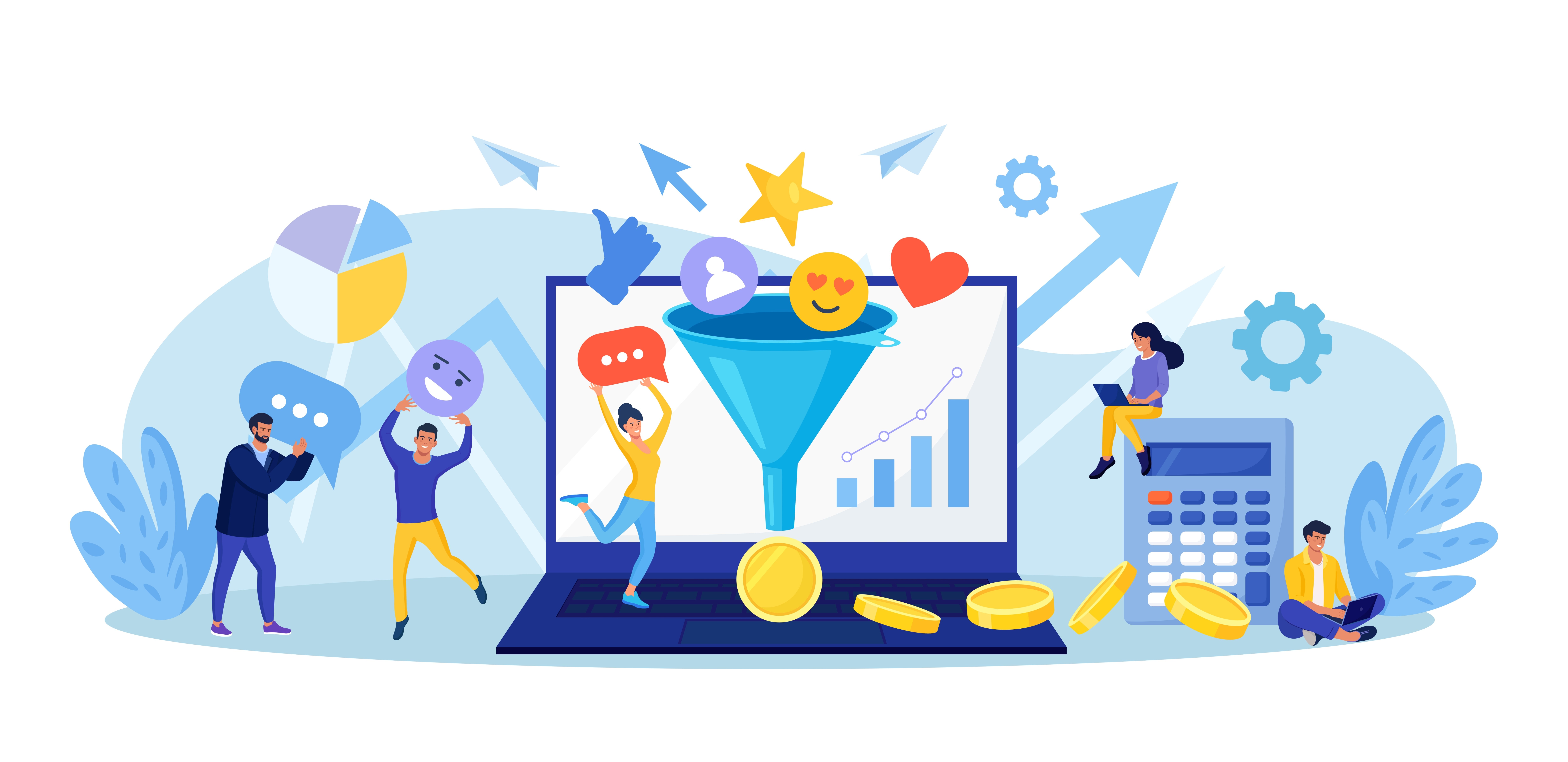
Loop marketing is a growth model that replaces the linear acquisition funnel with a continuous cycle of expressing value, tailoring experiences, amplifying presence, and evolving based on behavior. For associations, it means treating engagement as the main engine of revenue and retention, not just a soft “nice to have.”
To a degree, its rooted in what associations have done for quite a while, even prior to HubSpot's inception. The difference is that the 'loop' itself is now powered by AEO, AI, and omni-channel automation.
So what does AI-mechanized loop marketing look like for orgs now?
Linear paths have lost luster
For years, most associations have relied on a familiar pattern: run a campaign, drive traffic to a landing page, capture a form, and push prospects down a funnel until they convert. That model assumed people would come to your website, follow a mostly linear path, and that “conversion” (join, renew, register) was the finish line.
That world is gone.
HubSpot reports that around 60% of Google searches now end without a click, as AI Overviews and answer engines provide everything a searcher needs right on the results page. HubSpot calls this out as a core reason the old inbound funnel is “broken.” Your prospective members are getting answers from AI, YouTube reviewers, Reddit threads, and TikTok creators long before they see your carefully optimized landing page.
On top of that, attention is fragmented across channels, devices, and generations. A Gen X association executive might still rely on email and LinkedIn, while a Gen Z emerging professional is more likely to see your brand via a short-form video or a text message reminder. Yet many organizations still measure success as if everyone follows the same four steps from awareness to conversion.
The real pain point is that you’re executing “engagement” activities, but they don’t clearly translate into growth. The funnel was traditionally only optimized for acquisition. Once someone joined or registered, your metrics, and often your strategy, came to a screeching halt. Loop marketing changes that by making ongoing engagement the central growth lever.
How HubSpot’s Loop model maps to the member lifecycle
At its core, HubSpot’s Loop framework recognizes that growth isn’t one-dimensional and that AI is present at every stage of the journey. The model has four big motions: Express, Tailor, Amplify, and Evolve. In an association or nonprofit context, those map directly to the member, customer, or donor lifecycle you've all been serving for years.
In the Express phase, your job is to clearly communicate who you are, who you serve, and why it matters. This is your brand voice, point of view, and value proposition. The twist in the AI era is that you’re not only convincing humans, you’re training AI systems to recognize your authority so they surface your content in answers (otherwise known as AEO - Answer Engine Optimization). HubSpot’s Loop playbook emphasizes consistent, specific positioning so AI “agrees” that your content should be recommended.
Tailor is where integrated data and marketing automation turn that broad promise into highly relevant experiences. For a member organization, this might mean segmenting by career stage, role, or engagement pattern and dynamically adjusting email content, website recommendations, or event invitations. A number of HighRoad clients are already delivering these highly individualized journeys. In fact, one of our clients has moved from a single generic welcome series to role-based tracks, increasing first‑year engagement email click rates by more than 40%.
Amplify focuses on being present wherever your future members and current stakeholders spend time. That may include traditional channels like email and LinkedIn, but it increasingly means SMS, niche communities, or even unexpected placements (think of the Goodyear Blimp’s viral appearance at a BTS concert). The key is relevance, not channel loyalty.
Finally, Evolve is about continuous optimization. Instead of treating campaigns as one‑and‑done, you monitor behavior in real time and adjust copy, offers, and journeys while they’re running. Associations that adopt this mindset move away from “annual campaign calendars” toward dynamic engagement programs that respond as member behaviors change.
Mapping your own journey into a loop playbook
To put the Loop into practice, you first need a clear picture of your real member journey—messy loops and all. This starts with mapping experiences, not just touchpoints, and then identifying where engagement drops or disconnects.
Begin with a specific path, such as “prospective member attends flagship conference and becomes a member.” Map every digital and human interaction: first website visit, conference promo emails, registration, onsite experience, post‑event emails, membership offer, welcome communications, and follow‑up programming. For each step, list the systems involved (AMS, event platform, email tool, marketing automation, website, LMS).
Then overlay behavior data. Where do people actually fall off? One association discovered that 50% of first‑time conference attendees who checked “interested in membership” on a form never completed the join process. A closer look showed a clunky login step between their event system and AMS whereby password resets were failing, and people simply gave up.
In a Loop playbook, that insight would trigger both technical and engagement changes: simplifying authentication, adding a “magic link” to bypass credentials, and inserting a timely, personalized email from a membership advisor referencing specific sessions the attendee had rated highly. Within one renewal cycle, this association improved post‑conference conversion by double digits.
As you map, be honest about where your journey design assumes a straight line—“attend event → see offer → join”—and where reality is more like “attend event → ignore two emails → see LinkedIn post → ask AI about value of membership → finally click a retargeting ad.” Your Loop playbook should anticipate those loops and provide relevant paths back in at each point.
Using integrated data to personalize at scale
The Loop only works if you can listen and respond across channels. That requires integrated, trusted data living in a system of action like HubSpot, not scattered across your AMS, email platform, event tool, and website analytics with no reconciliation.
For associations, the practical move is to centralize behavioral and profile data in one place and use it to drive segmentation and automation. HighRoad often connects an AMS and event systems into HubSpot so that member status, products, transactions, and engagement activities sync into unified contact records. That lets you see, for example, that “Jordan” is a first‑year member, attended a regional conference, downloaded a DEI toolkit, and hasn’t logged into the LMS in 90 days.
With that context, personalization becomes far more than a first‑name token. You can:
- Trigger a tailored nurture track for first‑year members who attended a specific event but haven’t joined a community.
- Show dynamic website modules that recommend resources based on past downloads.
- Alert a member success rep when a historically engaged member’s activity score drops sharply.
One organization that consolidated member and marketing data this way built an engagement score using omni‑channel inputs—email, events, LMS, community, and website. They then targeted low‑scoring but high‑potential members with a “Choose Your Next Step” series, offering three concrete actions based on past behavior. That program lifted engagement scores for the target group by over 25% and produced a measurable bump in second‑year renewals.
Without integrated data, you risk the opposite: duplicated outreach, conflicting offers, and “cloned” views of the same individual across teams. That’s how members end up receiving five emails in two hours after a single purchase—confirmation, welcome, shipping, survey, and an upsell—driving them straight to the unsubscribe link instead of deeper into your Loop.
Shifting from one-off to always-on campaigns
Traditional campaigns assume a beginning and an end: launch date, flight window, wrap‑up report. Loop marketing reframes many of those efforts as always‑on programs tied to lifecycle stages rather than dates.
For example, instead of an annual “lapsed member win‑back campaign,” you might maintain a continuous re‑engagement program that watches for behavior thresholds—declining engagement scores, missed events, or a pattern of unopened emails. Once a member crosses that threshold, they automatically enter a tailored journey that could include:
- A direct note from a community leader referencing specific topics they previously engaged with.
- A short survey asking what’s changed in their role, with dynamic content based on responses.
- An invitation to a high‑value, no‑cost touchpoint (like a micro‑webinar or peer roundtable) aligned to their interests.
Another example: your conference marketing doesn’t have to restart from scratch every year. An always‑on program keeps past attendees warm with related content, local meetups, and “save the date” nudges, then automatically shifts them into registration promotions once dates are announced. Those who register go down a prepared onboarding path. Those who don’t receive smaller, lower‑commitment offers instead of a hard sell.
Moving to programs does not mean abandoning creativity or time‑bound campaigns. It means building evergreen, automated backbones that can support, extend, and learn from each campaign. That, in turn, gives your team time and space to experiment with new channels—SMS pilots, TikTok tests, or niche community sponsorships—without sacrificing the basics.
Measuring real engagement, not just vanity metrics
Loop marketing asks you to expand what you measure and shift away from purely surface‑level metrics. Open rates, pageviews, and impressions still matter, but they tell you about activity, not intent or value.
At the Express stage, a key metric isn’t just content volume—it’s velocity and cost. How fast can you move from idea to published asset while maintaining quality and brand integrity? One association began tracking “days from idea to asset” for campaigns repurposed across channels and cut that cycle time by 35% using AI‑assisted drafting and clear approval workflows.
In Tailor, metrics focus on relevance: segment‑level click‑through rates, content consumption depth, and completion of recommended “next best actions.” For instance, you might track how many first‑year members who receive a tailored “Get Started” guide actually complete three foundational actions (update profile, join a community, download a key resource) within 30 days.
Amplify introduces AI‑specific measures that many associations haven’t considered yet, such as your “share of AI voice” versus alternative communities or commercial providers. While there’s no perfect single metric today, you can approximate it by monitoring how often AI answer engines reference your brand or content for key questions compared to competitors, and by tracking referral traffic from AI‑driven sources over time.
In Evolve, the emphasis is on experimentation speed and impact. How many tests do you run per quarter? How quickly do you roll successful variants into your always‑on programs? What percentage lift in engagement or conversion do those changes deliver? Treat optimization itself as a measurable discipline, not an ad‑hoc activity when someone has extra time.
The outcome metrics that matter most—renewal rates, member lifetime value, program revenue per engaged contact—should be tied back to these Loop‑stage indicators so you can show leadership how engagement investments drive bottom‑line growth.
Scale personalization without losing your voice
AI is woven through every part of the Loop, but its role is support, not substitution. The risk many associations face is letting AI generate disconnected, generic content that doesn’t sound like their brand or serve their specific members.
The safer and more powerful approach is to use AI as a force multiplier for your clearly defined voice and strategy. That starts with capturing your brand standards, member personas, and key value messages in structured prompts or playbooks.
In practice, a small team might:
- Use AI to generate first drafts of segmented emails, then refine tone and specificity.
- Ask AI to suggest “next best content” based on a member’s recent interactions and persona.
- Summarize webinar transcripts (like a session on turning engagement into growth) into article outlines or social posts, preserving expert insights while reducing manual effort.
One association used AI to transform a single cornerstone research report into a full content series: persona‑specific blog posts, short video scripts, board talking points, and member‑only worksheets. By front‑loading their brand guidelines into their prompts, they maintained a distinctive, authoritative voice while tripling the number of assets they could produce from the same research.
Crucially, humans still review, edit, and approve. You’re not just asking AI to “write a member email”; you’re asking it to “draft a follow‑up email for first‑year members who attended our cybersecurity webinar, in a pragmatic, supportive tone, referencing this specific next step.” That level of context is what keeps personalization meaningful rather than mechanical.
Three practical steps to start building your Loop now
You don’t need to replace every funnel diagram in your organization tomorrow. Instead, take a few concrete steps this month to begin operating more like a Loop‑driven, AI‑aware association.
First, choose one high‑value journey and map it end‑to‑end with your team. For example, select the path from “webinar attendee” to “engaged committee volunteer.” Whiteboard every touchpoint, system, and handoff. Then use your marketing platform and AMS data to identify where engagement drops most sharply. That becomes your initial optimization focus.
Second, fix one disconnect that’s rooted in data silos. Maybe it’s the fact that your event system doesn’t talk to your email tool, so attendees get generic messages instead of session‑specific follow‑ups. Even a basic integration or regular data sync into a central system like HubSpot can unlock more relevant, timely outreach and a clearer picture of engagement.
Third, convert a single time‑boxed campaign into an always‑on lifecycle program. Take that “new member welcome” series that quietly ends after two or three emails and extend it into a 90‑day experience with clear, staged milestones. Use AI to help brainstorm value‑driven touchpoints (micro‑events, curated resource lists, community introductions) and to draft copy, but hold it to your brand standard and member expectations.
As you see early wins—more webinar attendees taking a next step, first‑year members completing key actions faster, fewer unsubscribes after purchases—use those stories to socialize the Loop mindset internally. Over time, you’ll find that treating engagement as your primary growth engine, supported by integrated data and responsible AI, does more than replace a funnel diagram. It builds a member experience that keeps feeding itself.
Get looped in with HubSpot
Let us help you leverage HubSpot's loop marketing philosophy and functionality to stand up the entire member lifecycle. Book time with us.
About Maneesha Manges
Maneesha Manges is a seasoned digital marketing professional with 20 years of experience working in multiple markets and global companies. Her prior experience includes consulting roles in digital marketing strategy, data analysis, field marketing and social media. Maneesha holds a Master of Business Administration degree in High-Tech Marketing from American University’s Kogod School of Business and a Bachelor of Arts degree in Economics from Concordia University in Montreal.